Chance Encounter - Skunk!
Apr 17, 2026When a Plant Introduces Itself by Smell
I recently spent a week visiting a friend near Portland, Oregon. The landscape was everything you’d expect—lush, green, and alive in that distinctly Pacific Northwest way. We filled our days with long walks and hikes, wandering through forests and wetlands.
Normally, I move quickly on walks intended for exercise. But this time was different. There was so much to notice—new foliage, unfamiliar plants, subtle shifts in the landscape—that our pace slowed naturally.
And then, before I saw it… I smelled it.
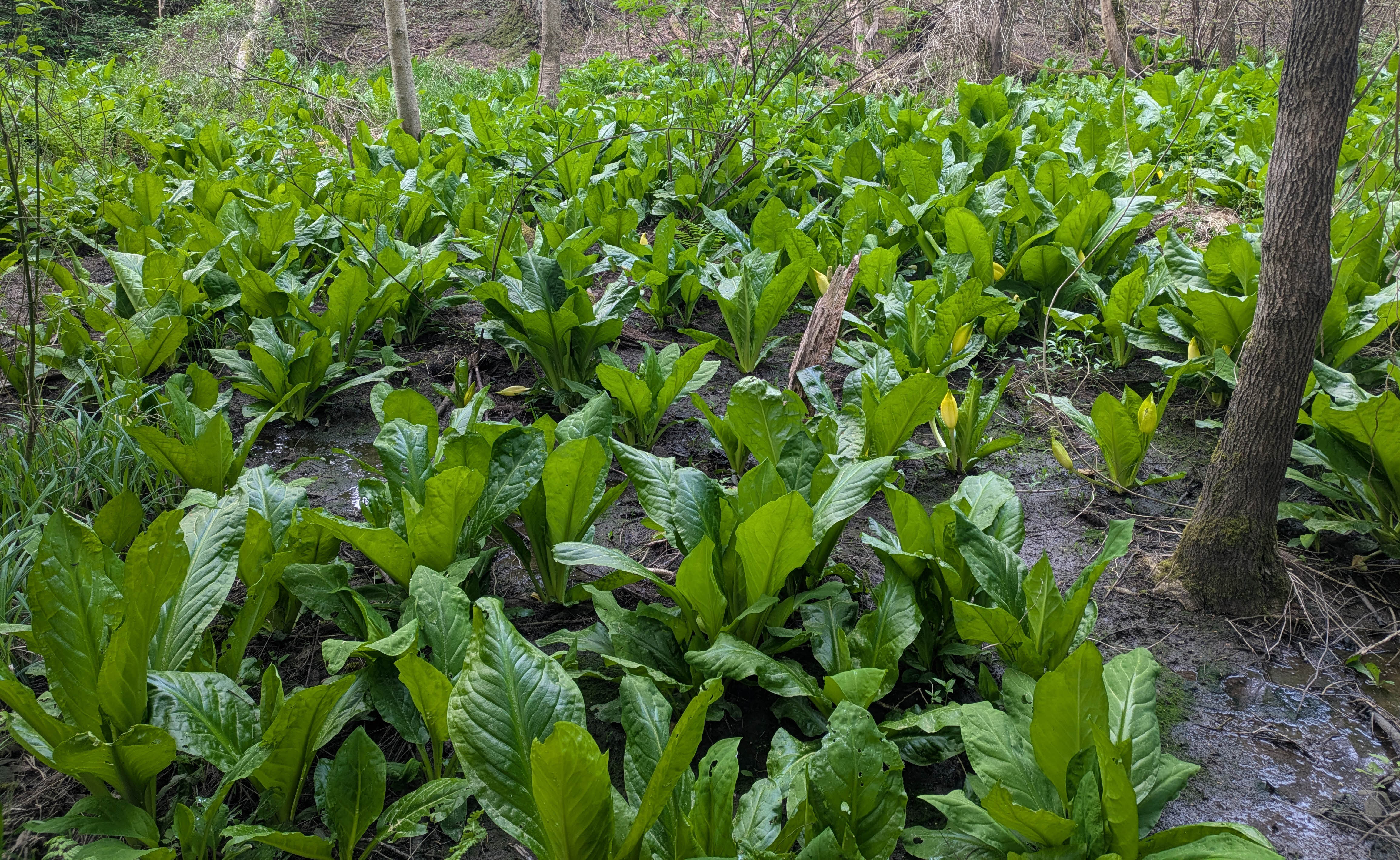
If you’ve ever had the pleasure (or surprise) of encountering skunk cabbage, you’ll understand. It announces itself unmistakably. Pungent, earthy, and yes—skunky. It’s one of those rare moments when a plant fully earns its name.
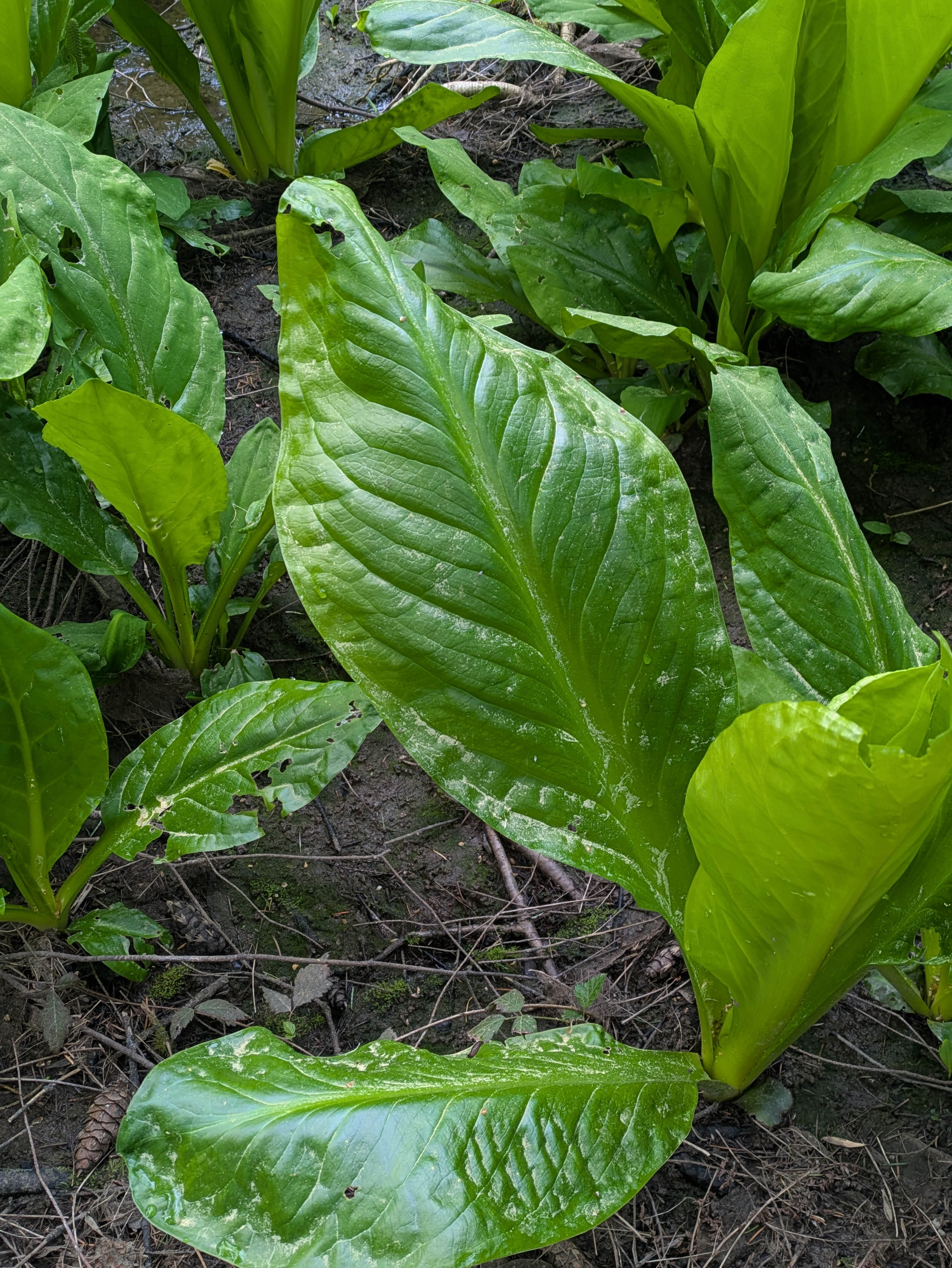
We soon came upon an entire field of it, thriving in a swampy stretch along the trail. Bold green leaves rising from saturated earth, completely at home in a place most plants would avoid.
Not All Skunks are Equal
What many people don’t realize is that there are actually two types of skunk cabbage:
-
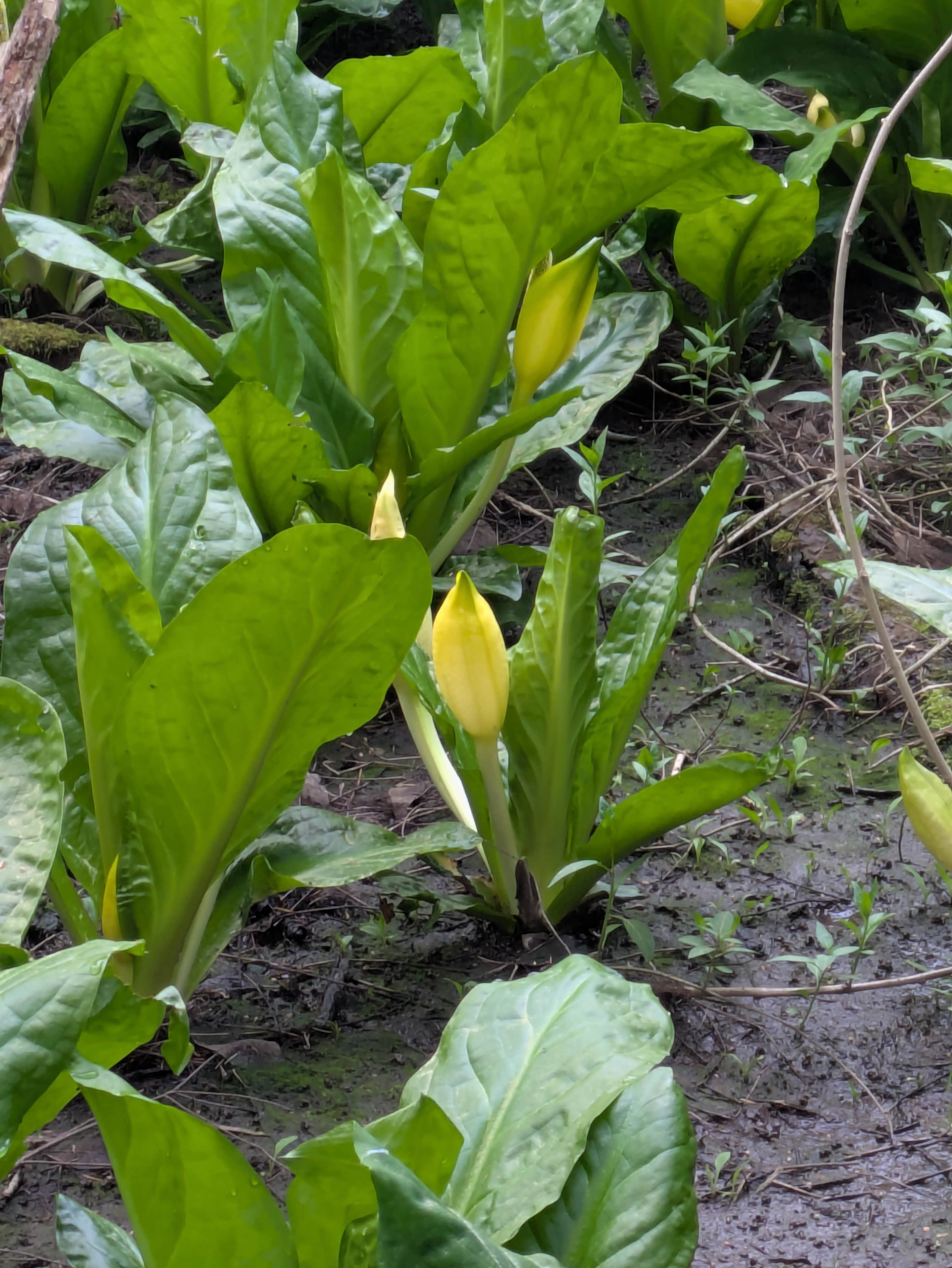
Western skunk cabbage (Lysichiton americanus) — the variety I encountered in Oregon
-
Eastern skunk cabbage (Symplocarpus foetidus) — more commonly associated with medicinal use
Though they share a name (and a smell), their uses and histories are a bit different.
Medicinal to its Roots
The roots of Eastern skunk cabbage has a long and fascinating history of medicinal use. In fact, it was once officially recognized in the U.S. Pharmacopoeia from around 1820 to 1882 under the name Dracontium (a reference to its earlier botanical classification).
Its uses were wide-ranging and well-established at the time. It was traditionally used for:
-
Respiratory conditions like asthma, bronchitis, and whooping cough
-
Nervous system support (nerves, anxiety)
-
Rheumatism (arthritis, joint pain)
-
Dropsy (edema)
-
As an antispasmodic (spasms, cramps)
-
As an expectorant to help clear mucus
Its inclusion in the Pharmacopoeia tells us something important—it isn’t just folklore. It had consistent, recognized medicinal effects and met the clinical standards of its time. Today, eastern skunk cabbage shows up in formulas designed to relax spasms—whether in the lungs, muscles, or nervous system. Think of it as a plant that helps the body release tension.
A Word of Caution
The plant I encountered, Western Skunk cabbage, has a slightly different story. There is evidence that Indigenous peoples used the young shoots as a food source, and as external medicine. It can only be used for food with proper preparation. This is not a casual or beginner-friendly plant.
Why?
Because skunk cabbage contains calcium oxalate crystals—tiny, needle-like structures that can cause intense irritation.
If eaten raw, these crystals can:
-
Feel like microscopic needles piercing the mouth and throat
-
Cause significant irritation to mucous membranes
-
Potentially contribute to kidney irritation if ingested improperly
Traditional preparation methods were very intentional:
-
Leaves were dried for extended periods (up to six months)
-
Cooking required multiple changes of water to reduce the crystals
This wasn’t a quick or convenient process—it was careful, knowledgeable preparation.
Appreciation From a Distance
Despite its fascinating history, skunk cabbage is not a beginner herb, and it’s not something to experiment with casually.
-
The leaves, roots, and flowers all contain irritating calcium oxalate crystals
-
It should never be eaten raw
-
Improper preparation can cause real pain
And perhaps most importantly:
Always verify plant identification using at least three trusted sources before harvesting anything. Even experienced herbalists approach plants like this with caution and respect.
As much as I love discovering plants in their natural habitat, this is one I’ll admire from a distance.
There’s something powerful about simply encountering a plant where it belongs—seeing how it grows, how it smells, how it fits into its environment. Not every plant needs to be harvested to be appreciated.
Some just need to be noticed.
And this one? It made sure I noticed.
By: Kristi Taylor, M.H., Natural Healing Guide
References
Brill, S. (n.d.). Identifying and Harvesting Edible and Medicinal Plants. HarperCollins.
University of Wisconsin–Madison Extension. (n.d.). Skunk cabbage (Symplocarpus foetidus). Wisconsin Horticulture Division.
https://hort.extension.wisc.edu/articles/skunk-cabbage-symplocarpus-foetidus/Wild Foods and Medicines. (n.d.). Skunk cabbage: Traditional uses.
https://wildfoodsandmedicines.com/slider-/#:~:text=Traditional%20Uses:%20Skunk%20cabbage%20has,%E2%80%9Ccoughing/gagging%20syndrome.%E2%80%9D
Arcadian Abe. (2012). Wild cabbage.
https://arcadianabe.blogspot.com/2012/03/wild-cabbage.htmlMoerman, D. E. (1998). Native American Ethnobotany. Timber Press.
Grieve, M. (1931). A Modern Herbal. Dover Publications.
Felter, H. W., & Lloyd, J. U. (1898). King’s American Dispensatory. Ohio Valley Co.